/

Programs

Inaugural Program
Inaugural Program

Master’s in Educational Leadership

Master’s in Educational Leadership

A transformative, blended two-year Master's programme empowering current and future leaders to catalyse change through education.

A transformative, blended two-year Master's programme empowering current and future leaders to catalyse change through education.

Rooted in the belief that ethical leadership improves individual and community learning, MEL equips working professionals to drive systemic reform in schools, higher education, and educational programs. Through Work-Integrated Learning (WIL), research, and collaborative inquiry, participants explore the intersections of policy, culture, and pedagogy while applying learning directly within their professional contexts.

Rooted in the belief that ethical leadership improves individual and community learning, MEL equips working professionals to drive systemic reform in schools, higher education, and educational programs. Through Work-Integrated Learning (WIL), research, and collaborative inquiry, participants explore the intersections of policy, culture, and pedagogy while applying learning directly within their professional contexts.

Why Choose MEL at KBU?
MEL combines academic rigour, reflective leadership, and real-world practice, preparing graduates to guide education systems toward more equitable and effective futures.

MEL combines academic rigour, reflective leadership, and real-world practice, preparing graduates to guide education systems toward more equitable and effective futures.

Designed for working professionals in education and related fields.

Earn academic credit through Work-Integrated Learning from your professional role.

Small cohorts enabling close mentorship and collaborative learning.

Learn from international faculty and regional education leaders.

Conduct action research on real education challenges.

Our Flexible Programme Design

Duration: 2 years

Six academic terms each year (6 weeks per term)

Blended learning combining seminars, collaborative work, and independent research.

Work-Integrated Learning credits based on professional practice

Optional January Term modules for additional credits.

Up to 2 years grace period to complete remaining coursework

Component
Structure
Terms per year

Terms per year

6 terms

6 terms

Weeks per term

Weeks per term

6 weeks

6 weeks

Learning hours per week

Learning hours per week

34 hours

34 hours

Credit earned per week

Credit earned per week

~1 UGC credit (1 KBU credit)

~1 UGC credit (1 KBU credit)

Credits per year

Credits per year

36 KBU credits

36 KBU credits

Total programme credits (2 years)

Total programme credits (2 years)

72 KBU credits (~81.6 UGC credits)

72 KBU credits (~81.6 UGC credits)

The curriculum combines foundational learning, specialization, and research.

The curriculum combines foundational learning, specialization, and research.

Year 1

Foundations

Students build a grounding in education systems, leadership, and pedagogy through core courses, electives, and structured reading discussions. Work-Integrated Learning begins in the first year.

Students build a grounding in education systems, leadership, and pedagogy through core courses, electives, and structured reading discussions. Work-Integrated Learning begins in the first year.

Year 2

Specialisation and Research

Students deepen their focus through advanced coursework and a supervised action research thesis addressing a real educational challenge.

Students deepen their focus through advanced coursework and a supervised action research thesis addressing a real educational challenge.

Choose Your Leadership Focus

In the second year, students pursue one of two strands

Instructional Coaching Leadership:

Instructional Coaching Leadership:

Focus on teacher development, classroom practice, and data-informed instructional improvement.

Focus on teacher development, classroom practice, and data-informed instructional improvement.

Higher Education Leadership:

Higher Education Leadership:

Explore institutional leadership, governance, policy, and academic innovation in universities and colleges.

Explore institutional leadership, governance, policy, and academic innovation in universities and colleges.

How will you learn?

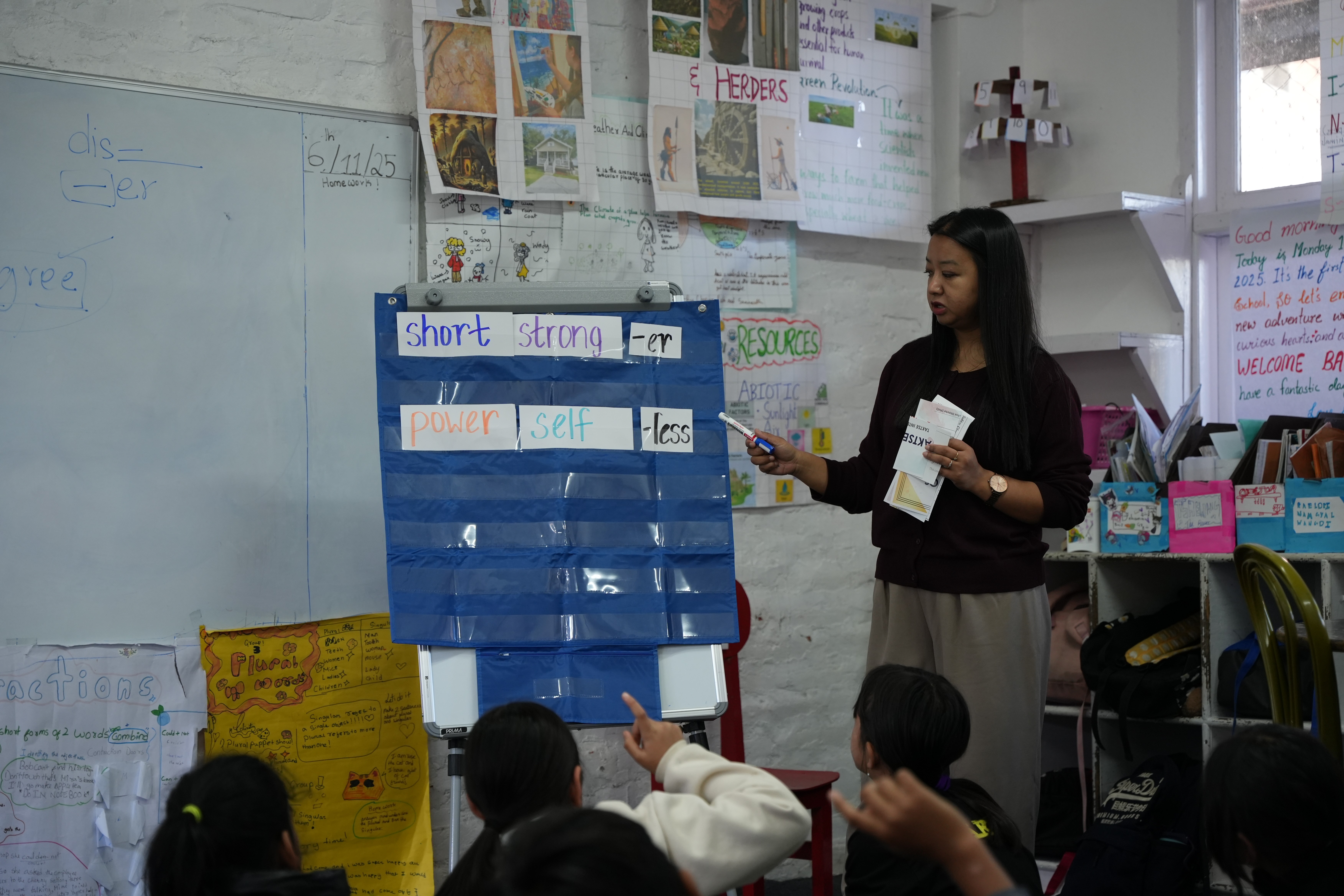
Learning at KBU is collaborative, reflective, and practice-driven. The classroom extends beyond lectures, encouraging dialogue, inquiry, and collective learning. Our teaching methods include:

Learning at KBU is collaborative, reflective, and practice-driven. The classroom extends beyond lectures, encouraging dialogue, inquiry, and collective learning. Our teaching methods include:

Case-based learning

Studio-style workshops

Field immersion and practitioner dialogue

Mentored research and leadership practice

Reflective writing and discussion

Is this for you?

Eligiblity

We’re looking for purposeful learners with humility and a drive to transform education.

Your Background:

Bachelor's required. Diverse fields welcome - rigorous engagement trumps prior specialisation.

Core Traits:

Curious thinkers; reflective and open to growth; ethically committed to societal good; collaborative; resilient leaders who act.

Learning Outcomes

Become a skilled teacher mentor and school leader

Lead ethically with international perspectives tailored to India/Himalayas.

Use research and data for transformative decisions.

Foster community engagement and reflective practice.

Career Outcomes

Graduates emerge ready to embody KBU's karuṇā - compassionate action, prepared to lead across multiple areas of education.

School principals and administrators leading systemic school transformation

Master teachers and instructional coaches mentoring teachers through data-driven feedback.

Higher education leaders shaping institutional policy and pedagogy.

Himalayan education innovators bridging local needs with global best practices

Admission Process

Discover if MEL is your path to transformative leadership.

Our holistic, invite-only process evaluates purposeful candidates across three meaningful stages, honoring intellectual curiosity, reflective depth, and commitment to education.

Our holistic, invite-only process evaluates purposeful candidates across three meaningful stages, honoring intellectual curiosity, reflective depth, and commitment to education.

01

Application Form

  • Grade 10/12 scores

  • Valid test scores (SAT, GRE, GMAT, CUET)

  • Degrees/certificates post-Class XII (Bachelor's mandatory)

  • Education experience details

  • Statement of Purpose showcasing your intent

  • Recommendation from a professional educator observer

02

Video Submission

Record a 2-minute video:
  • Choose from a list of provided topics.

  • Speak passionately on one thesis statement that resonates with you.

03

Case Study Workshop

Applicants join an online session to engage with a real education leadership case, responding to prompts through written reflection and discussion.

Fees and Financials

Affordable excellence for professionals. Fees support instruction, workshops, research supervision, and access to digital and physical learning resources.

Affordable excellence for professionals. Fees support instruction, workshops, research supervision, and access to digital and physical learning resources.

Category
Amount

Tuition (Year 1)

₹5,05,000

Resource Fees (Year 1)

₹65,000

Admission (One-Time)

₹30,000

Total Program Fees Payable

₹6,00,000

Financial Aid

At KBU, we are committed to ensuring that financial constraints do not stand in the way of purposeful leaders. Financial aid is available through the Founding Scholarship and the Teaching Fellowship Scholarship, and each application is reviewed holistically.

Interested in learning more? Reach out to us at info@kbu.edu.in to understand what this means for you.